A rough demo often contains placeholders: a string line waiting for a player, a drum pattern that tells the band where to enter, a synthetic voice sketching a harmony. These tools can help a songwriter explain an idea. But a placeholder can become a finished part simply because the deadline arrives and nobody budgets for a session musician. The decision may be understandable and still have a cost.
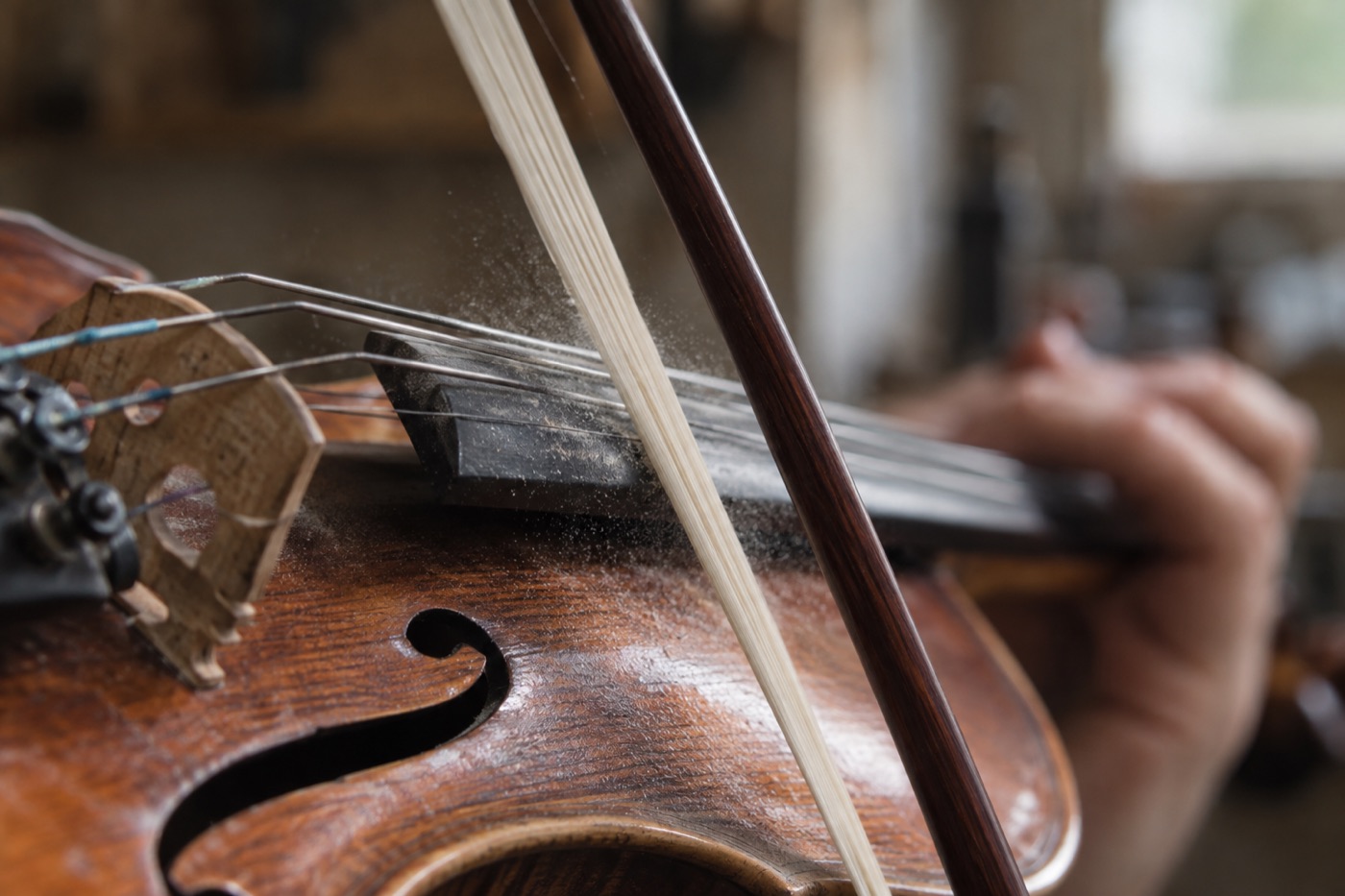
A player does more than execute notes. They react to the room, the phrasing of another person, and the emotional ambiguity of the song. A violinist can make a line hesitate where the composer expected it to move. A drummer can rescue a stiff arrangement by refusing to treat every beat as identical. Collaboration introduces choices that were not available to the person writing the brief.
Not every project can hire a full ensemble. The practical alternative is not a moral decree that every generated part is forbidden. It is to identify the moments where another musician would change the work most. Spend a limited budget on that moment rather than spreading it thinly across services chosen only because they are customary.
Credit matters too. If a generated guide part remains in the record, say so without implying that a human player performed it. If a musician transforms the sketch, name and pay them. The goal is not nostalgia for an expensive studio model. It is preserving a path for people to contribute, earn, and surprise one another.
This is perspective, not a reported interview. AI-assisted drafting and original generated editorial artwork were reviewed for publication; the artwork does not depict a documented event.